Mini Basketball
- 4.5
- Rating
- 10.00M
- Installs
- Free
- Price

 Analysis by App-foxy
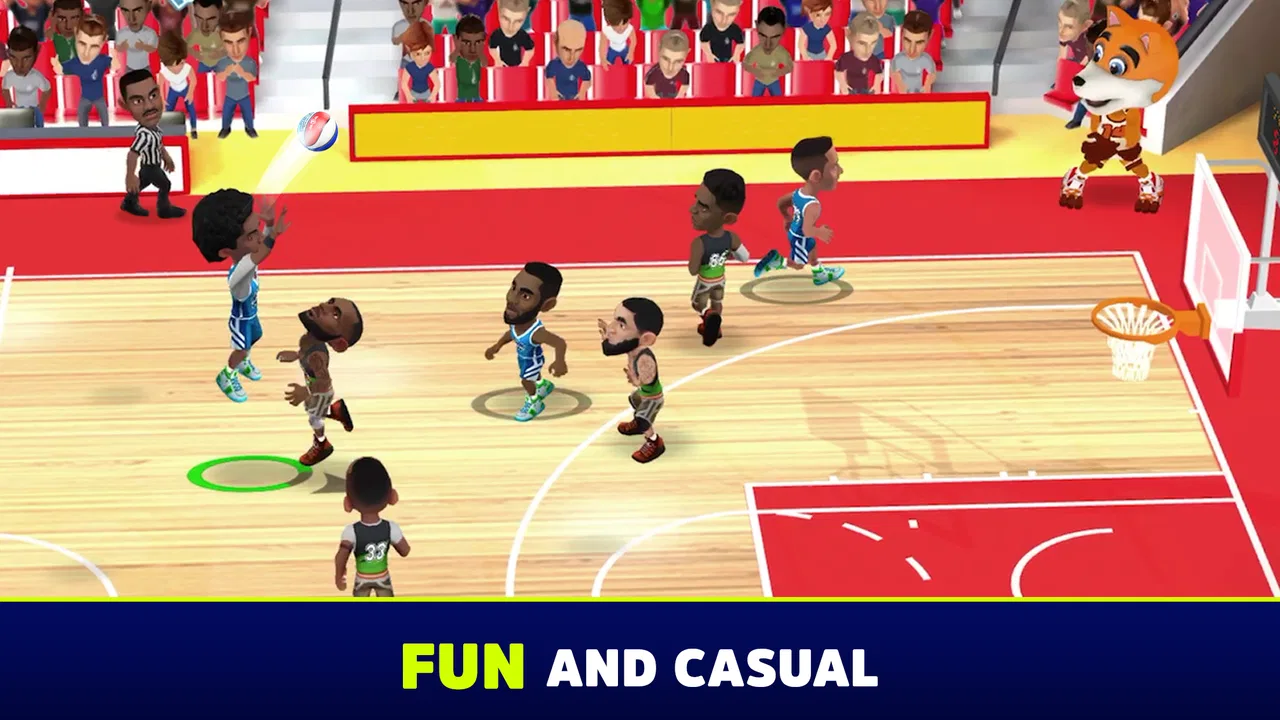
Mini Basketball is the kind of sports game I can open for a quick match without needing to learn a complicated control system first. Developed by Miniclip.com, it focuses on a straightforward basketball experience that fits comfortably into short sessions. I found it easy to understand from the first game, but there is enough room for timing, decision-making, and progression to keep it from feeling like a one-minute novelty.
It is free to download, rated Everyone, and available for devices running Android 7.0 or later. The game has built a sizeable audience, with over ten million installs, an average rating of 4.5 from around 141 thousand ratings, and roughly 7.9 thousand written reviews. Those figures suggest that the simple format works for many players, although popularity alone does not guarantee that it will suit your preferred style of basketball game.
What playing Mini Basketball feels like in everyday use
My first impression was that the game is designed around accessibility rather than simulation. You do not need to understand advanced basketball tactics to start enjoying it. The presentation and controls are aimed at getting me into the action quickly, which makes it a useful choice when I want something more interactive than a puzzle but less demanding than a full sports management game.
You May Also Like

 Google Keep - Notes and lists
Google Keep’s Quiet Growth Shows the Appeal of Simpler Notes
As mobile work gets busier, Google Keep keeps winning a simple contest: capture a thought quickly, find it later, and get on with the day.

 Blood Strike: 2.5 Anniversary
Blood Strike’s Loadouts Turn Every Drop Into a Tactical Gamble
A close look at Blood Strike’s custom loadouts: how fast access to signature weapons reshapes its battle royale rhythm, rewards preparation, and narrows the gap between fights.

 Pandora - Music & Podcasts
Pandora’s Music Is Easy to Start, but Harder to Recover
Pandora’s strength is its low-effort path from a seed to a station. Its weak spot is how much confidence it asks you to place in connection, setup, and quiet recovery.

 8 Ball Pool
 Is Built on Rivalries, Rematches, and Routine
A close look at the rivalries, rematches, shared routines, and unanswered safety questions that turn a quick pool match into a persistent mobile community.

 Samsung Music
’s Quiet Strength Is Playing What You Already Own
Its reach comes less from spectacle than from dependable access to a personal library. That simplicity is both the app’s strongest retention engine and its ceiling.

 AccuWeather: Weather Radar
AccuWeather Review: A Quick, Clear Forecast for Everyday Decisions
For everyday plans, the best forecast is the one you can understand quickly. AccuWeather makes rain timing, radar, and local conditions easy to act on, with a few trade-offs.
More From Our News Desk



A realistic use case is a short break during the day. I can play a match while waiting for an appointment, during a commute break, or when I have only a few minutes before doing something else. That quick-session quality is one of its strongest advantages. It does not ask me to commit to a long career mode before the game becomes enjoyable.
The trade-off is that players looking for a detailed console-style basketball simulation may find the experience too light. Mini Basketball is better understood as an approachable mobile sports game than as a replacement for a deep, licensed basketball simulator. The appeal comes from immediacy, not from reproducing every part of the sport.
The developer’s choice to keep the concept compact also helps the game feel less intimidating for younger players and casual users. The Everyone age rating supports that broad audience. I would still expect parents to consider the game’s optional spending elements before handing it to a child, especially if the device allows purchases without an additional approval step.
Learning the controls without wasting time
The most useful early habit is to treat the opening matches as practice for timing rather than as a test of perfection. I found that rushing every action makes the game feel less controlled. Taking a moment to read what is happening on court usually produces better decisions than tapping quickly just because the match is moving.
That advice matters because simple controls can be deceptive. A game may be easy to start while still rewarding players who pay attention to rhythm, positioning, and the moment an opportunity appears. I would not judge the whole experience after the first few minutes. The initial simplicity becomes more interesting once I stop trying to force every play.
For a new player, I recommend using the early matches to identify which actions feel reliable under pressure. Rather than spending immediately, I would first learn whether the control style itself is enjoyable. This is an important distinction: a purchase cannot fix a game that does not feel satisfying in your hands.
Progression, motivation, and the pressure to spend
Mini Basketball is free, but it includes in-app purchases ranging from $0.49 to $89.99 per item. That wide range is the main point I would discuss with anyone deciding whether to install it. The low-cost options may seem harmless in isolation, while the highest-priced option represents a much more serious commitment. I would approach the purchase screen with a fixed personal limit rather than making decisions match by match.
I also think it is useful to separate enjoyment from progress. If I am having fun with the basic matches, the free entry point already gives me a reason to keep playing. If I begin feeling that I must buy something to remain competitive or avoid frustration, that is a signal to pause. Spending should add convenience or enjoyment, not become the condition for continuing.
The pressure can be subtle in any free sports game because progression naturally creates goals. A player may want stronger results, faster improvement, or a more satisfying team setup. Those goals are not automatically a problem, but they can make optional purchases feel less optional during a losing streak. My practical rule is to wait until I have played enough to understand the normal pace before deciding whether any purchase is worthwhile.
Another useful approach is to avoid buying immediately after a disappointing match. Frustration makes a purchase feel like a solution, even when the real issue is unfamiliar controls or a poor decision during play. I would close the purchase screen, play again later, and only reconsider when I am calm. That small pause makes the free-to-play structure easier to manage.
The game is therefore most comfortable for players who enjoy gradual progress and can ignore items they do not need. It is less suitable for anyone who dislikes seeing optional purchases in a competitive sports setting. The price range is clear, but the personal value depends on how much pressure the progression creates for each player.
Fairness matters more than visual rewards
My main fairness question is whether spending changes the competitive experience. The purchase information confirms that optional items are available, but it does not establish how each item affects matches, progression, or player strength. I would not claim that the game is pay-to-win, and I would also avoid promising that spending has no competitive effect. The sensible position is to test the free experience first and observe how comfortable the normal progression feels.
That uncertainty does not make the game unusable. It simply changes how I would recommend approaching it. I would enjoy the matches, keep track of whether losses feel connected to my decisions, and avoid treating a purchase as a shortcut to skill. If I can improve by learning timing and making better choices, the competitive side feels more rewarding.
Players who care strongly about equal conditions may prefer a sports game with a clearly defined one-time purchase or a mode that does not connect spending to performance. Mini Basketball is a better fit for someone who accepts a free-to-play structure and is willing to set boundaries. The fairness experience will depend heavily on how the individual player responds to progression and purchase prompts.
I also recommend comparing your own expectations with the game’s scale. If you want a relaxed basketball match with a mobile-friendly pace, optional spending may be a manageable compromise. If you want a pure competitive environment where every player starts from exactly the same position, this may not be the safest choice without first trying it carefully.
How it compares with other mobile basketball choices
Compared with a full basketball simulation, Mini Basketball is easier to pick up and less demanding in time. A simulation usually appeals to players who want detailed rosters, tactical control, and a closer recreation of the real sport. I would choose that type of game when I want to build a long-term sports project or study every part of a match.
Compared with an arcade basketball game, this title sits in a more structured middle ground. It still aims for quick fun, but the sports setting gives each match more purpose than simply scoring as many points as possible in a brief challenge. That makes it suitable for players who want a little progression alongside the action.
It is also different from basketball manager games. Those titles are mainly about planning, numbers, contracts, and long-term decisions. Mini Basketball is for me when I want to participate directly rather than supervise from the sidelines. Anyone who prefers strategy screens to active play should look elsewhere.
The best alternative depends on what you dislike. If you dislike complex controls, this game’s approachable design is a strength. If you dislike free-to-play purchases, a paid sports game may offer a calmer experience. If you dislike short matches, a deeper simulation will probably provide more lasting satisfaction.
Small habits that improve the experience
My first practical tip is to play with a stable connection and enough battery for a complete session, especially if I am starting a match during a short break. Interruptions are more annoying when the game is designed around quick momentum. I also prefer to begin a session when I can finish at least one match rather than opening it while rushing between tasks.
My second tip is to judge progress over several sessions instead of one result. A single poor performance can come from unfamiliar timing, distraction, or an overly aggressive approach. Looking for patterns helps me decide whether I genuinely need a change in strategy or whether I am simply reacting emotionally to a loss.
My third tip is to make purchase decisions outside the excitement of competition. I would decide in advance whether I am willing to spend anything, and if so, set a small limit. The available items range from less than a dollar to nearly ninety dollars, so a clear boundary is especially important. The smartest purchase strategy is to spend only when the game remains enjoyable without the purchase.
A fourth tip is to use the game as a social, low-pressure activity rather than turning every match into a test of status. That mindset makes mistakes easier to tolerate and reduces the temptation to chase progress. For younger players, I would combine that approach with device-level purchase controls so that the free-to-play design does not lead to accidental spending.
What I would want to understand before committing
One question many players will have is whether the game works well for children. The Everyone rating makes it broadly accessible, and the controls are approachable enough for casual play. However, the presence of in-app purchases means I would still supervise spending settings. Age suitability and purchase suitability are not exactly the same thing.
Another likely question is whether an older Android phone can run it. The minimum requirement is Android 7.0, which covers a wide range of devices, but real performance can still vary with hardware and background activity. I would install it on the intended device and check responsiveness before deciding whether it deserves a permanent place on the phone.
Some readers will ask whether the game is worth playing without paying. My answer is yes, provided you enjoy the core matches and are comfortable progressing at the free pace. I would not install it solely because I expect purchases to make the experience better. The free version should be the test: if the basic loop is not fun, spending will not solve that problem.
Players may also wonder whether it is suitable for serious basketball fans. I would say it depends on what “serious” means. If you want a quick basketball-themed game, it can be a pleasant choice. If you want authentic depth, extensive tactical control, or a detailed simulation, I would choose a different category of sports game.
Finally, people often want to know whether the game is a good long-term installation. My answer is cautious but positive for casual players. Its value comes from returning for short matches and gradually improving, not from promising an endlessly deep basketball career. If that rhythm matches your habits, it can stay useful; if you need constant new systems and heavy realism, it may lose its appeal sooner.
Version, access, and the practical download decision
The current version is 1.6.18, and the game was released on February 25, 2022. Those details make it clear that this is an established mobile title rather than a brand-new experiment. I would still check that my device meets the Android requirement and that I have enough storage and connection stability for a comfortable installation.
Because the game is free, trying it carries less financial risk than buying a premium sports title upfront. The real commitment is time and attention, followed by the possibility of optional spending. I would install it when I want a compact basketball experience, then make the decision to keep it based on how the matches feel rather than on the size of its audience.
Miniclip.com is a familiar name in casual mobile gaming, but I would not treat the developer’s identity as a guarantee that every player will enjoy this particular design. The important test remains personal: do the controls feel responsive, does the progression motivate rather than pressure you, and can you ignore purchases without feeling disadvantaged?
My final trust verdict
I recommend Mini Basketball to casual sports players who want quick basketball matches, simple entry, and a free way to try the experience. Its broad age rating, large install base, and strong average rating make it a reasonable candidate for a first download, while the Android 7.0 requirement keeps the technical barrier relatively approachable for compatible devices.
My recommendation comes with a clear condition: treat the in-app purchase system carefully. The available prices run from $0.49 to $89.99 per item, so I would never tap through a purchase without checking the amount and deciding whether it fits my limit. I would also avoid assuming that spending is necessary for competitive success, because the purchase information alone does not answer that question.
For me, the game earns trust as a free trial, not as an automatic promise of fair competition. I would play without paying first, observe how progress feels, and keep it only if the matches remain enjoyable on their own. That approach gives the title a fair chance while protecting the player from turning a quick sports game into an unwanted expense.
If you want a friendly basketball game for short breaks, I think it is worth trying. If you want a detailed simulation, a completely purchase-free competitive environment, or a one-time-payment experience, I would look at other sports options instead. Mini Basketball works best when its limits are understood: it is a convenient, accessible mobile game whose value depends on enjoying the play before worrying about progress.
FAQs for Mini Basketball
01What is Mini Basketball and how does it differ from other basketball games?
Mini Basketball is an arcade-style basketball game designed for mobile devices, providing a casual yet engaging experience. Unlike simulation-heavy games, it focuses on quick matches and simplified controls, making it accessible to players of all ages. The game emphasizes fun and fast-paced action over realistic gameplay, appealing to those looking for a more relaxed experience.
02Can I play Mini Basketball offline, or do I need an internet connection?
Mini Basketball requires an internet connection for most of its features, such as online multiplayer and accessing leaderboards. While some basic features might be available offline, the full experience, including updates and events, is best enjoyed with a stable internet connection. This ensures you can participate in all game modes and compete with friends.
03Are there in-app purchases in Mini Basketball, and are they necessary?
Yes, Mini Basketball includes in-app purchases that allow players to buy cosmetic items, player packs, and other enhancements. While these purchases can enhance the gaming experience, they are not necessary to enjoy the game. Players can still progress and compete without spending money, although purchases may provide a quicker path to unlocking premium content.
04What are the device requirements for running Mini Basketball smoothly?
Mini Basketball is designed to run on most modern Android and iOS devices. For optimal performance, it's recommended to have a device with at least 2GB of RAM and a recent operating system version. This ensures smooth gameplay and reduces the risk of crashes or performance issues, especially during graphic-intensive moments in the game.
05Is there a multiplayer mode in Mini Basketball, and how does it work?
Yes, Mini Basketball features a multiplayer mode where players can compete against others worldwide. The game matches players based on skill level to ensure fair and competitive gameplay. Players can also invite friends to join matches, allowing for a social and interactive gaming experience. Regular tournaments and events keep the competition fresh and exciting.
Pros
- Easy to learn gameplay mechanics.
- Engaging and vivid graphics.
- Quick matches fit busy schedules.
- Customizable teams and players.
- Frequent updates with new features.
Cons
- In-app purchases can be costly.
- Occasional connectivity issues.
- Some ads interrupt gameplay.
- Limited offline functionality.
- Progression can feel slow at times.

Mini Basketball
Gallery